This blog is called skogar.ai, and the game I shipped in August is called SKOGARK. Both names trace back to a village on the south coast of Iceland that I have never seen.
Here is the convergence. My name is Gary Skoglind. Years ago a work email system compressed that to skogar@, and the handle stuck. Much later I learned that Skógar is a real place — a village of a few dozen people at the foot of a waterfall — and that skógar is Icelandic for “the woods,” the same forest root that sits inside Skoglind. The name had been pointing somewhere the whole time. I didn’t pick it; it picked me twice, and when something crosses your path twice, you pay attention.
Þrasi’s gold
Skógar’s waterfall is Skógafoss: sixty metres of falling white, wide as a church and far louder. The legend says the first settler there, Þrasi Þórólfsson, hid a chest of gold in a hollow behind the curtain of the falls. Generations later, men from the village got ropes on it and hauled. The ring on the side of the chest tore free; the chest slid back under the water and has stayed there since. The brass ring — every ounce of treasure anyone ever landed — was hung on the church door, and today it sits in the Skógar folk museum, polished bright by four centuries of hands.
I like that legend because it is honest about what treasure does. The gold never comes out of the pool. It just keeps bringing people to stand in the spray and look.
The adventure
Skógar is now a destination in SKOGARK — a small quest called Þrasi’s Gold. You arrive on the coastal bus, hear the legend from the museum curator, and go looking for the three traces the old settler left behind: the ring on the church door, the rainbow in the spray, and a glint behind the falls that you’ll only catch if you’ve heard the story first.
The sheep and the doughnut
My favorite part of the adventure is the toll collector. On the meadow path between the museum and the falls stands a round Icelandic sheep in a full winter’s worth of wool, positioned exactly where you want to walk, with — as the game puts it — “the eyes of an official who has processed many tourists.” It cannot be pushed, reasoned with, or gone around.
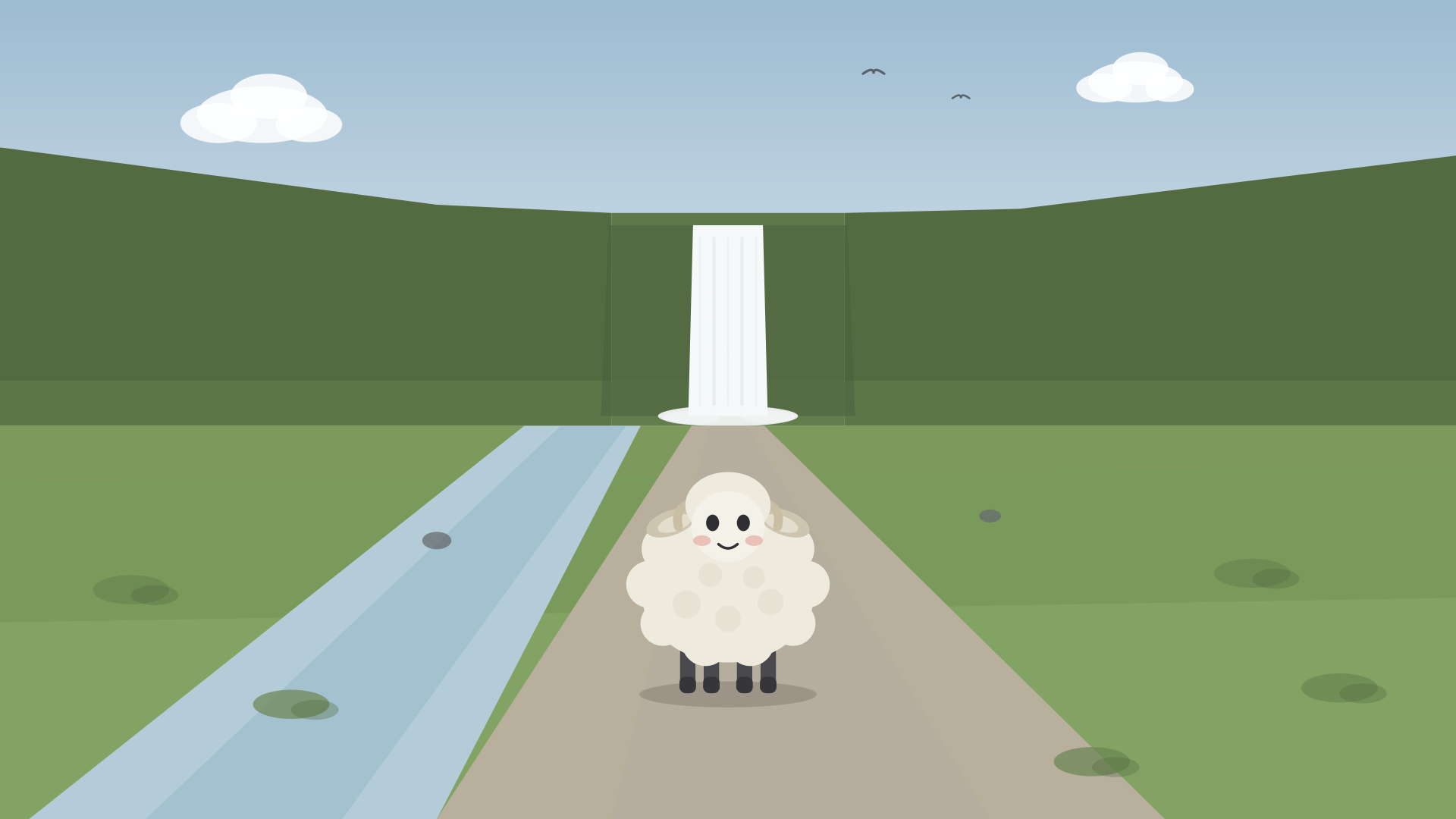
What works is a kleina: a twisted, diamond-shaped Icelandic doughnut, fried golden and dusted with sugar, sold at the museum for four coins. Offer it and the sheep accepts the toll and steps aside. It is the best four coins you will spend in the game, and I refuse to believe real Icelandic sheep operate any differently.
A pilgrimage still to be made
Every other destination in the game is autobiography — Sydney, Tokyo, London, Savannah, places I lived and things that happened in front of me. Skógar is the first exception, and I kept it honest: in the game, as in life, it is a pilgrimage still to be made rather than a memory. The village gave me its name before I gave it a visit. I intend to settle the debt in person.
The adventure is free, on iOS and on the web. Ride the bus in, talk to the curator, buy the doughnut, and stand at the foot of the falls. The gold stays where it is. That was always the point.
Leave a Reply